An Empire of Afterimages
click


An Empire of Afterimages
An Empire of Afterimages
(Work in Progress)
There is never a pure access to a single object; vision is always multiple, adjacent to and overlapping with other objects, desires, and vectors. Even the congealed space of the museum cannot transcend a world where everything is in circulation.
Jonathan Crary: Techniques of the Observer.
WHAT
An Empire of Afterimages is a work in progress that registers the aberrations of observation and its associated ‘knowledge’ claims that ensued from colonialism as a formal quality of the photographic image. Presented as a series of approximately 30 photographs, this project combines the genres of museological documentation, still life, landscape and constructed photography to critically analyse the colonial gaze. To be sure, this is a critical study of the 19th century colonial observer and not the racialized subjects displaced though his imperialist gaze. Thus, this project subjects the colonial observer to an analogous form of scrutiny that the historically ‘observed’ were subjected. The project’s purpose is to register the blind spots and impediments obstructing and distorting perception; in order to bring to light the hallucinatory, phantasmagoric and often spurious worldmaking practices of modernity.
HOW
The Collection & Associated Sites—In order to conjure these aberrations of observation, the project takes form around two principal subjects—19th century Australian colonial artefacts from museum collections and the specific sites designated by these artefacts. Specifically, I’m interested in a diverse range of material culture including—objects, documents, photos, tools, personal effects, journals etc.—associated with measurement, looking, interpretation, contact, scientific observation, anthropology and travel. As a starting point, research and consultation on the histories embedded in these artefacts will direct the manner in which they are photographed. The artefact’s histories will then be followed to the actual sites they are associated with for the production of staged landscape and seascape photographs. Indeed, while it might be possible to allude to a generalized figuration of the 19th colonial observer, these artefacts ground the project in a specific set of localized histories reimagined from the vantage point of the 21st century.
Formal and Technical Application—The camera used for this project will be manipulated so that it doesn’t produce standard looking photographic images. Specifically, it’s a large-format analogue camera fitted with a digital scanning back that was originally manufactured to produce extremely high resolution images for the fine art reproduction industry. However, because it captures images progressively (like a photocopier) rather than instantaneously (like most cameras), it can be intentionally misused—when during the exposure, either the camera is moved or the scanning back is desynchronized from a rotating motorized platform that the object sits on. My intentional ‘misuse’ of this camera is designed to produce distorted images that constitute analogies and metaphors to formally register and critique the aberrations of observation.
Furthermore, in collaboration with an optical physicist I plan extend the capabilities for producing distorted images. This will entail developing filters made from 3D routed plastics that screw onto the camera lens and algorithmic filters applied during post production that interpolate the images. Coupled with my ‘misuse’ of the the camera, these optical illusions invoke a moderated form of chance to entangle, stretch, fracture and compress the visual field. In this process, backgrounds metastasize into foregrounds and vice versa as a critical strategy for analysing the way dichotomies of figure/ground and stranger/local—have produced and continue to produce—epistemologies and mythologies of cultural Otherness .
WHY—CONTEXT & SIGNIFICANCE
By reactivating artifacts from the museum’s collection and associated sites, this project participates in the “decolonial turn”, through its critical elaboration on broader economies of trade, power, migration and economic exploitation. As a form of decolonial aesthetics, this project seeks to participate in deconstructing colonial ideologies of superiority and privilege. To be sure, in no way do I claim to address this from centre stage, but in proximity to and in solidarity with those directly involved in dismantling vestiges of the colonial matrix that continue to inhabit our present. Furthermore, this project can be contextualized as part of the “material turn” in contemporary photography. Following the dematerialization of the art object that was central to conceptual art and the subsequent dematerialization of the photographic image via the medium’s digitization—artists have reacted by accentuating the affective properties of photographs and their agency in social networks. Echoing the spirit of these impulses, this project draws on adjacent concerns within the field of material culture studies that highlights the role artefacts play in actively shaping culture. Rather than passive vessels to be ascribed cultural meaning, my shared intention is to highlight the agency and social lives of these objects and to evoke the ways their meanings shift over time.
While the practice of artists working with museum collections is not new, my approach seeks to discover novel methods for reinterpreting the archive by activating the contingent nature of artefacts and their ever changing symbolic potential to represent. My process is akin to how the Australian historian Greg Dening characterised history-making as a process of “returning to the past its own present”. In this way, my method is primarily performative rather than documentary—where the impetus is not to re-present and decontextualize, but to reactivate to recontextualize.
Quite like the kaleidoscopic changes that vision was subjected to in the modern era, today’s observer is at comparable crossroads with the advent of artificial intelligence. It could be said that AI affords access to both a modern and pre-modern visuality—a means of imagining and representing the world that is at once hyper-mobile, but also dangerously immobile and homogenized. As such, this project highlights the significant ethical and political parameters at stake in observing to remind us that there is nothing innocent about the simple act of looking.
Fantasticology Tokyo
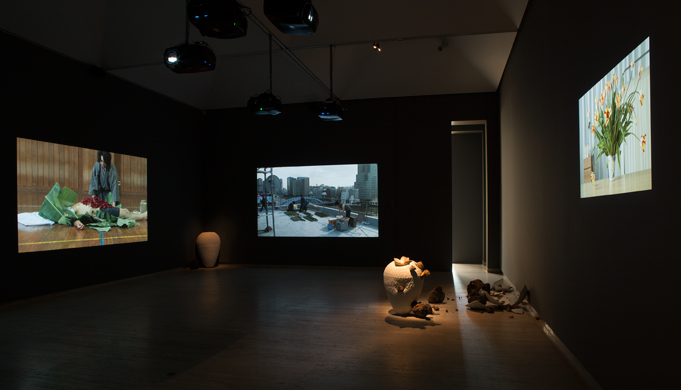 |
|
| Title: | Fantasticology Tokyo: Faults, Flesh and Flowers Installation view, Art Gallery of New South Wales |
| Year: | (2011-2013) |
| Media: |
HD video and sound, stoneware, paper clay, wood-fired unprocessed clay and rock
Image courtesy of artists |
Fantasticology Tokyo
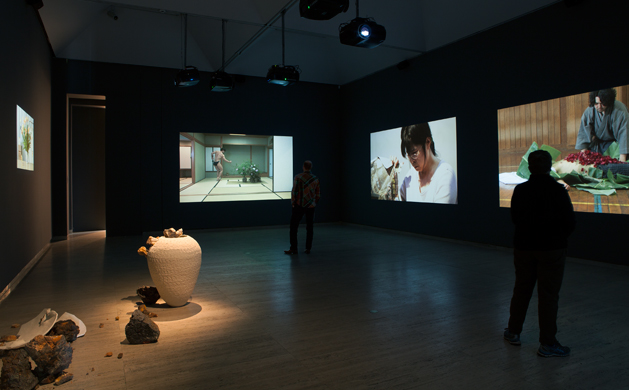 |
|
| Title: | Fantasticology Tokyo: Faults, Flesh and Flowers Installation view, Art Gallery of New South Wales |
| Year: | (2011-2013) |
| Media: |
HD video and sound, stoneware, paper clay, wood-fired unprocessed clay and rock
Image courtesy of artists |
Fantasticology Tokyo
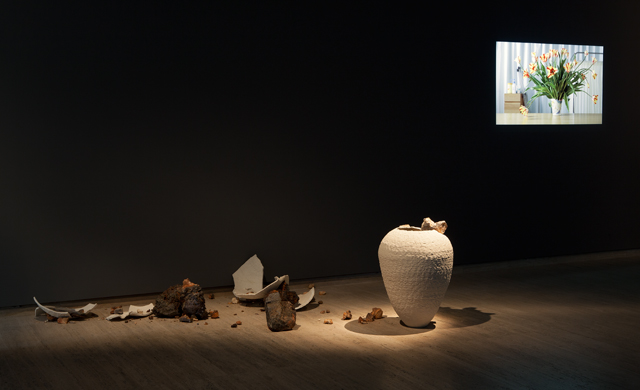 |
|
| Title: | Fantasticology Tokyo: Faults, Flesh and Flowers Installation detail, Art Gallery of New South Wales |
| Year: | (2011-2013) |
| Media: |
HD video and sound, stoneware, paper clay, wood-fired unprocessed clay and rock
Image courtesy of artists |
Fantasticology Tokyo
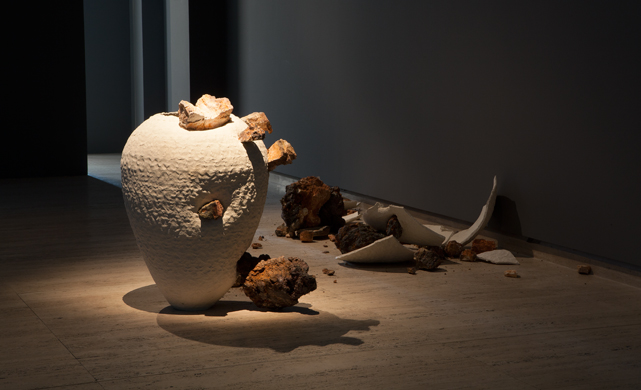 |
|
| Title: | Fantasticology Tokyo: Faults, Flesh and Flowers Installation detail, Art Gallery of New South Wales |
| Year: | (2011-2013) |
| Media: |
Stoneware, wood-fired unprocessed clay and rock
Image courtesy of artists |
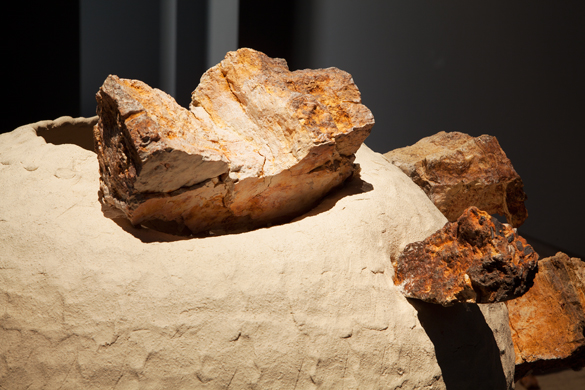
Fantasticology Tokyo
 |
|
| Title: | Fantasticology Tokyo: Faults, Flesh and Flowers Installation detail, Art Gallery of New South Wales |
| Year: | (2011-2013) |
| Media: |
Stoneware, wood-fired unprocessed clay and rock
Image courtesy of artists |
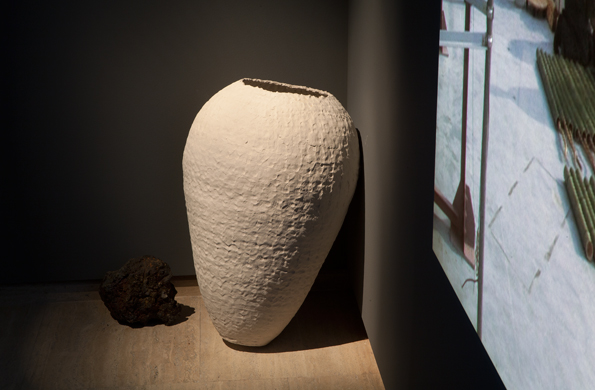
Fantasticology Tokyo
 |
|
| Title: | Fantasticology Tokyo: Faults, Flesh and Flowers Installation detail, Art Gallery of New South Wales |
| Year: | (2011-2013) |
| Media: |
HD video and sound, paper clay, wood-fired unprocessed clay and rock
Image courtesy of artists |
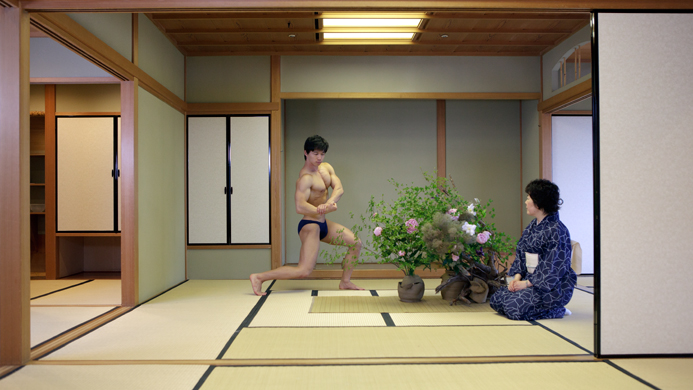
Fantasticology Tokyo
 |
|
| Title: | Muscles and Pears Production still From the work Fantasticology Tokyo: Faults, Flesh and Flowers, (2011-2013) |
| Year: | (2011) |
| Media: |
HD video and sound Duration: 25:06 min Image courtesy of artists |
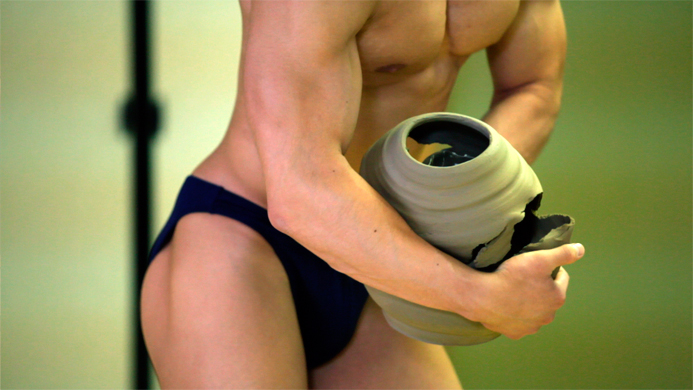
Fantasticology Tokyo
 |
|
| Title: | Muscles and Pears Production still From the work Fantasticology Tokyo: Faults, Flesh and Flowers, (2011-2013) |
| Year: | (2011) |
| Media: |
HD video and sound Duration: 25:06 min Image courtesy of artists |
Fantasticology Tokyo
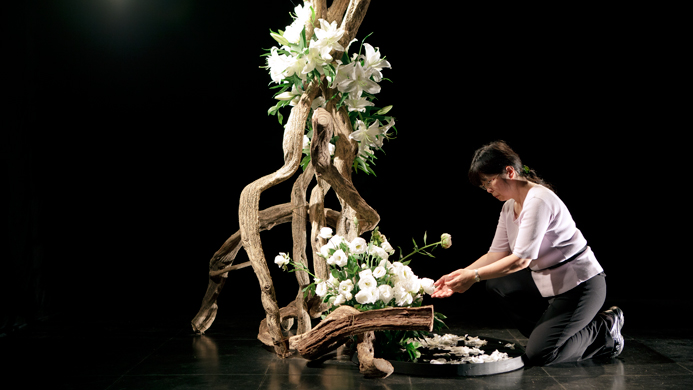 |
|
| Title: | Arrangement for Peonies Production still From the work Fantasticology Tokyo: Faults, Flesh and Flowers, (2011-2013) |
| Year: | (2011) |
| Media: |
HD video and sound Duration: 20:10 min Image courtesy of artists |
Fantasticology Tokyo
 |
|
| Title: | Arrangement for Peonies Production still From the work Fantasticology Tokyo: Faults, Flesh and Flowers, (2011-2013) |
| Year: | (2011) |
| Media: |
HD video and sound Duration: 20:10 min Image courtesy of artists |
Fantasticology Tokyo
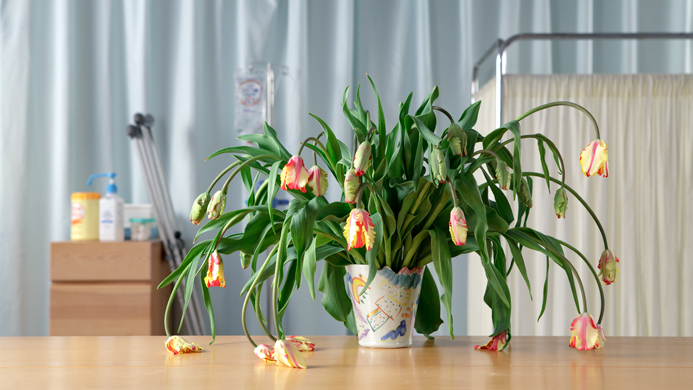 |
|
| Title: | Hospital Prelude Production still From the work Fantasticology Tokyo: Faults, Flesh and Flowers, (2011-2013) |
| Year: | (2011) |
| Media: |
HD video and sound Duration: 21:26 min Image courtesy of artists |
Fantasticology Tokyo
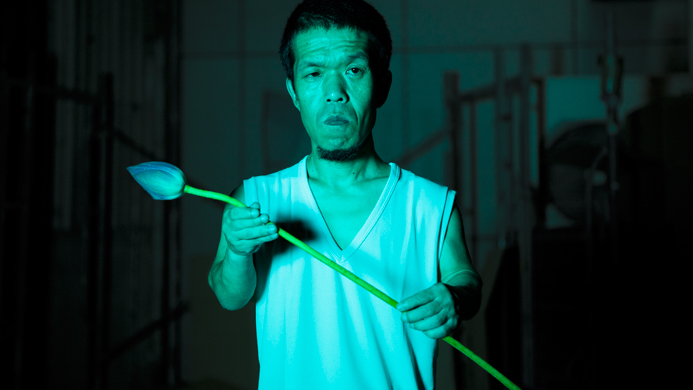 |
|
| Title: | Nengemisho (Pick up Flower Subtle Smile) Production still From the work Fantasticology Tokyo: Faults, Flesh and Flowers, (2011-2013) |
| Year: | (2011) |
| Media: |
HD video and sound Duration: 14:50 min Image courtesy of artists |
Fantasticology Tokyo
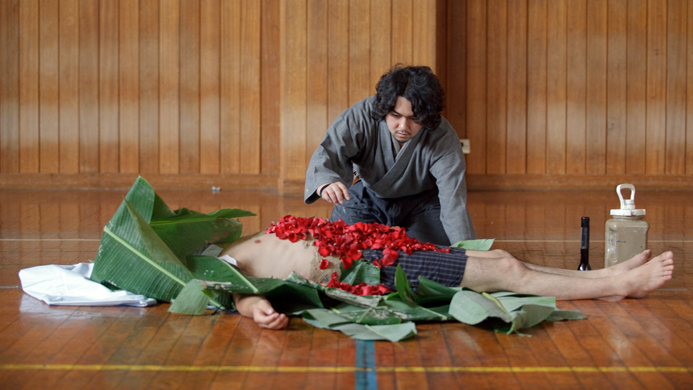 |
|
| Title: | Borrowed Form Production still From the work Fantasticology Tokyo: Faults, Flesh and Flowers, (2011-2013) |
| Year: | (2011) |
| Media: |
HD video and sound Duration: 18:15 min Image courtesy of artists |
Fantasticology Tokyo
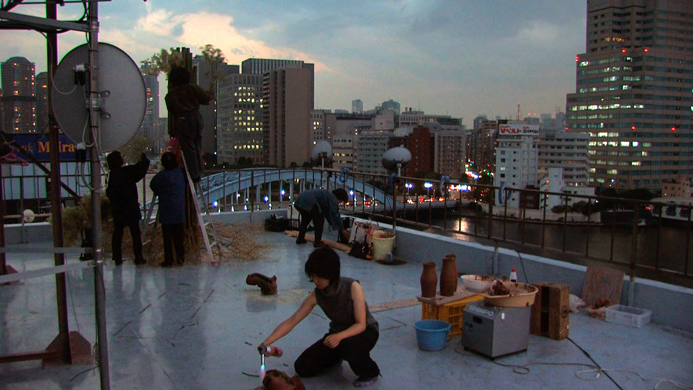 |
|
| Title: | Yorishiro for Tokyo Production still From the work Fantasticology Tokyo: Faults, Flesh and Flowers, (2011-2013) |
| Year: | (2011) |
| Media: |
HD video and sound Duration: 23:44 min Image courtesy of artists |
Fantasticology Tokyo
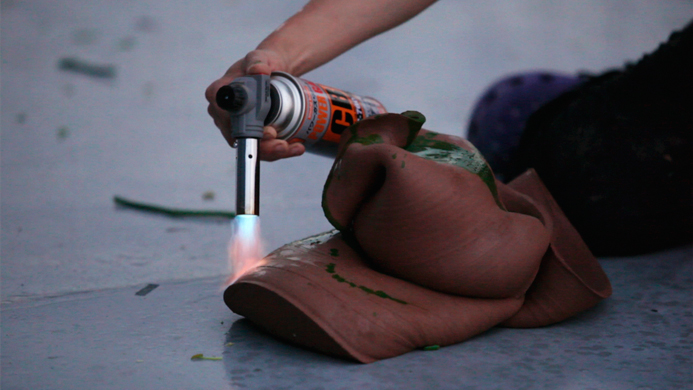 |
|
| Title: | Yorishiro for Tokyo Production still From the work Fantasticology Tokyo: Faults, Flesh and Flowers, (2011-2013) |
| Year: | (2011) |
| Media: |
HD video and sound Duration: 23:44 min Image courtesy of artists |
Fantasticology Tokyo
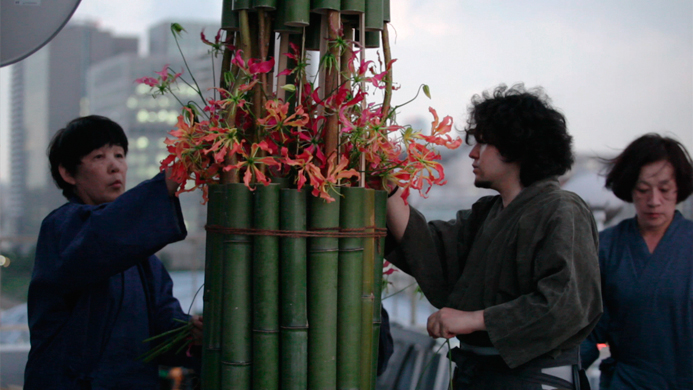 |
|
| Title: | Yorishiro for Tokyo Production still From the work Fantasticology Tokyo: Faults, Flesh and Flowers, (2011-2013) |
| Year: | (2011) |
| Media: |
HD video and sound Duration: 23:44 min Image courtesy of artists |
Fantasticology Tokyo
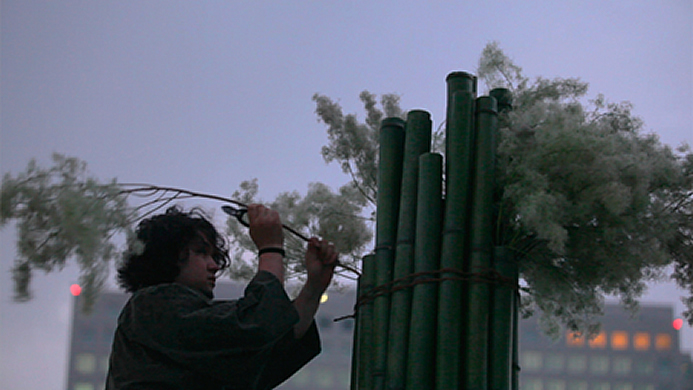 |
|
| Title: | Yorishiro for Tokyo Production still From the work Fantasticology Tokyo: Faults, Flesh and Flowers, (2011-2013) |
| Year: | (2011) |
| Media: |
HD video and sound Duration: 23:44 min Image courtesy of artists |